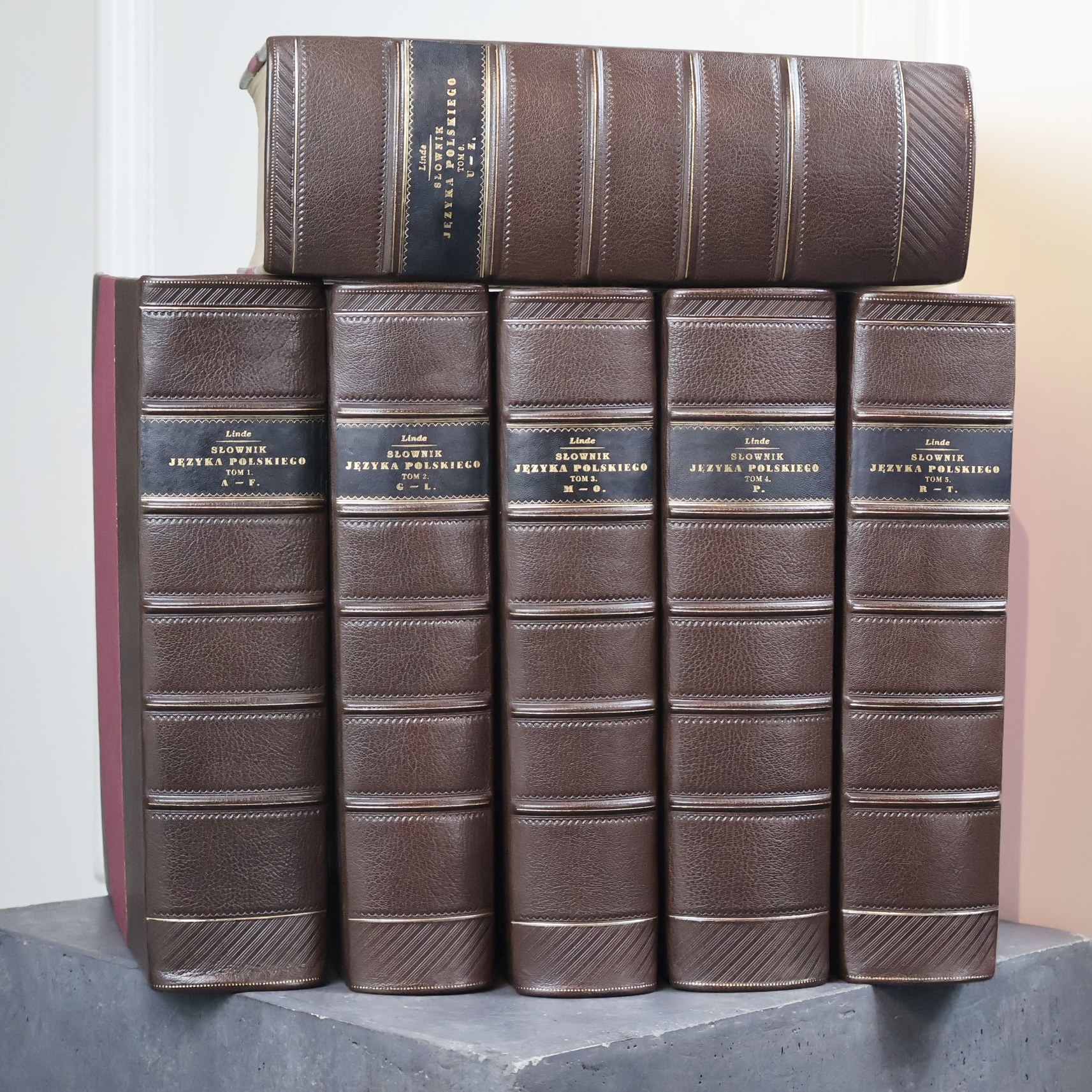
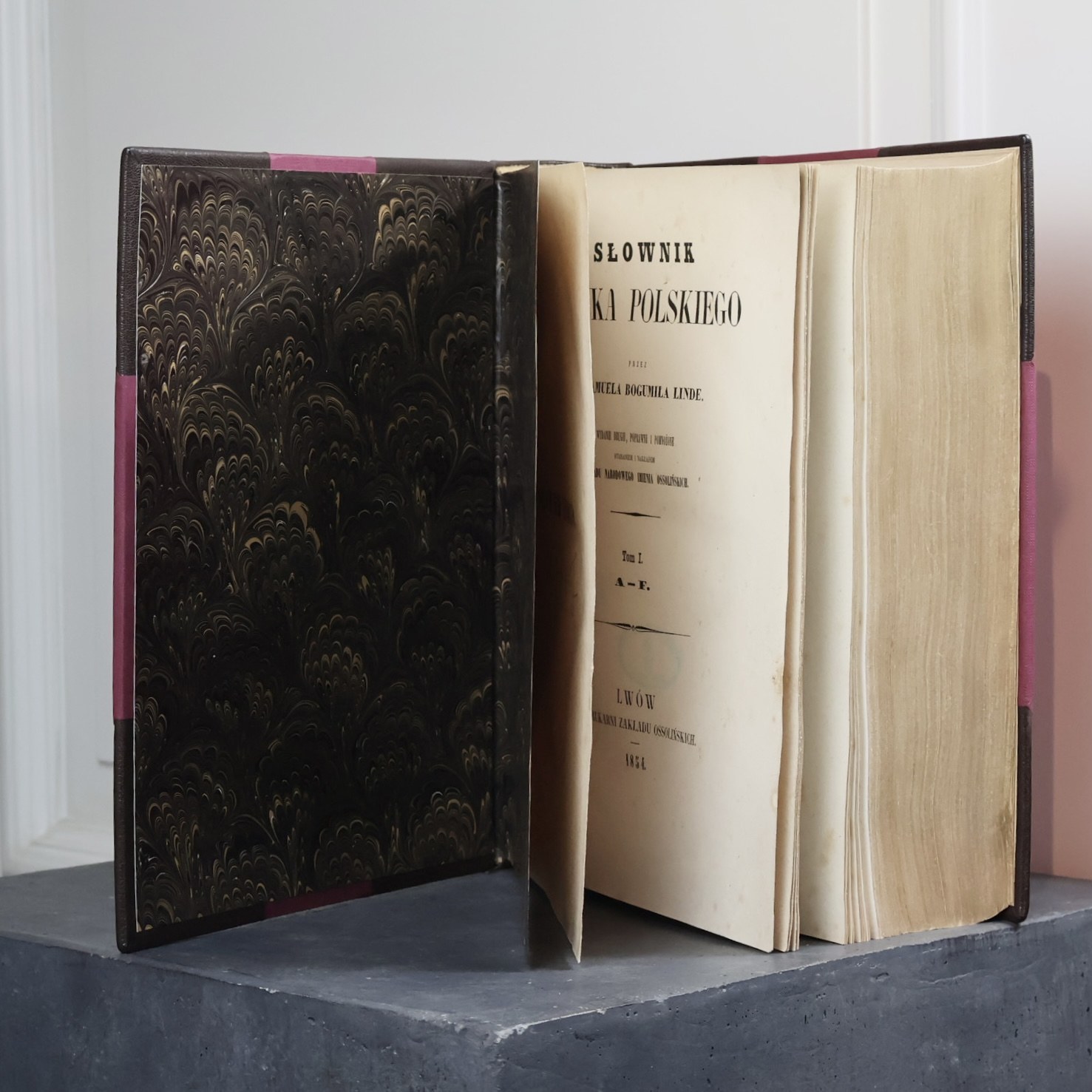
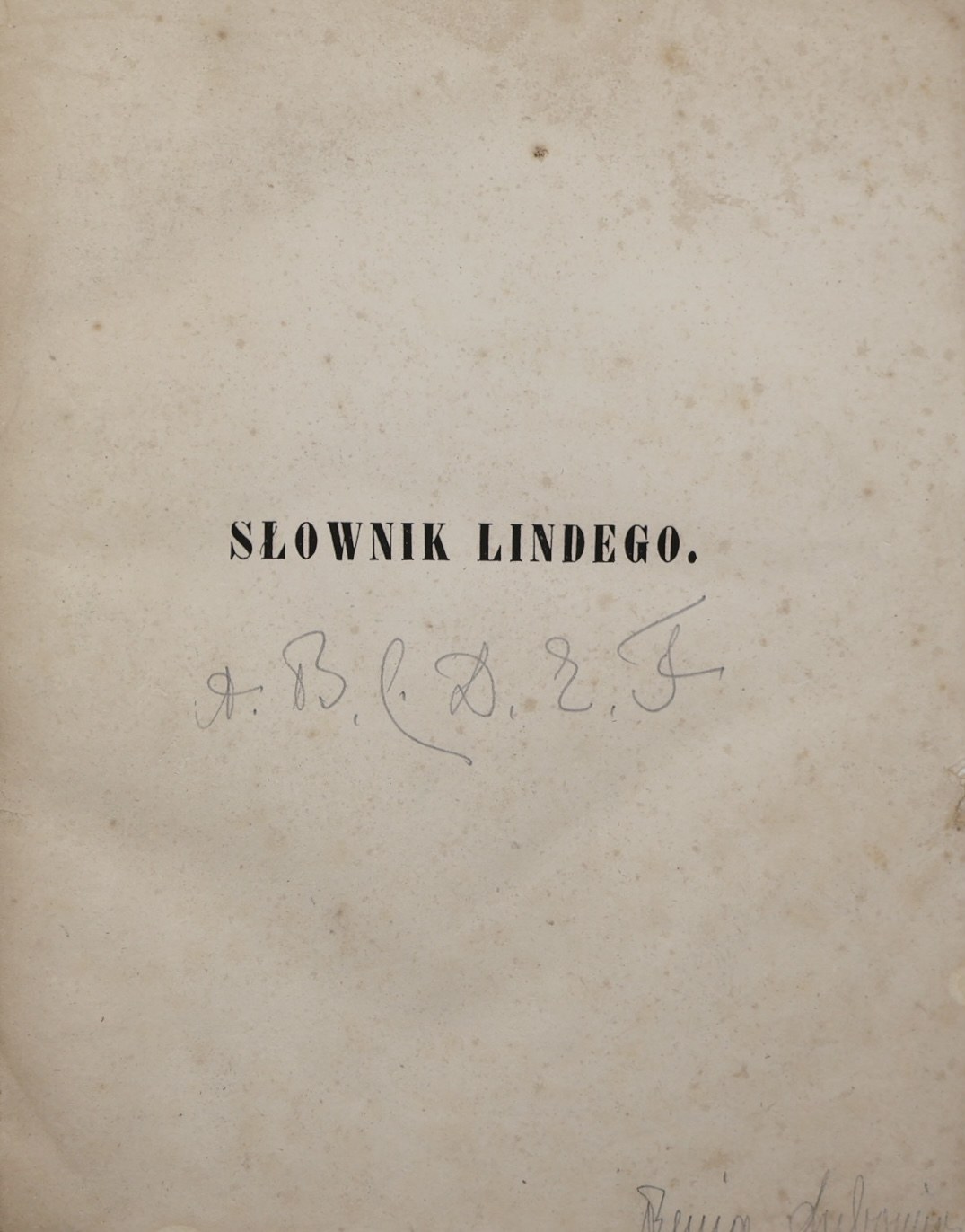
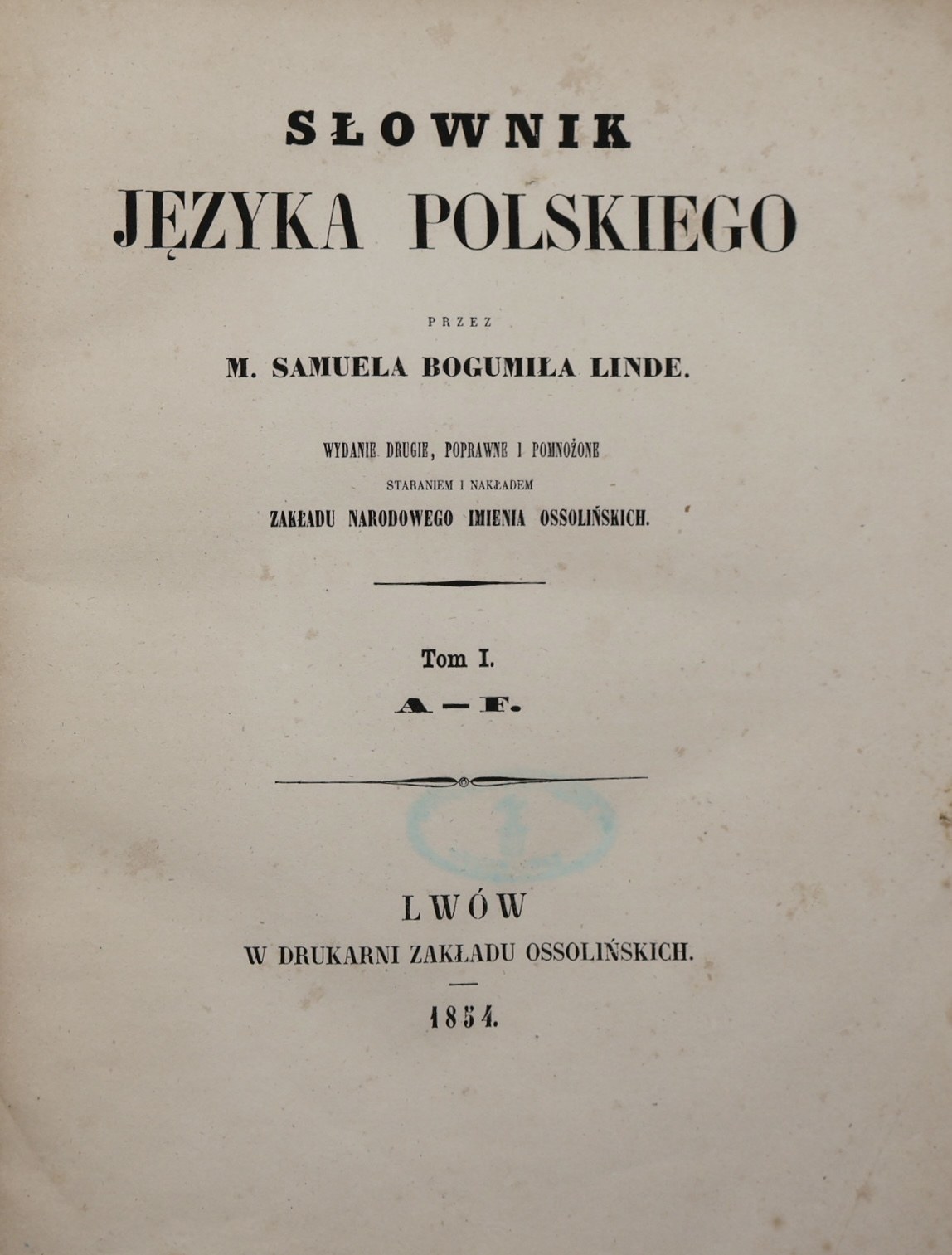
Dictionary of the Polish Language. Volumes I–VI. Second edition, revised and expanded. Complete set.
Samuel Bogumił Linde (1771–1847). Lviv, Ossoliński National Institute, 1854–1861. Edited by August Bielowski. Text in a two-column layout. Size approx. 28 cm. 6 volumes.
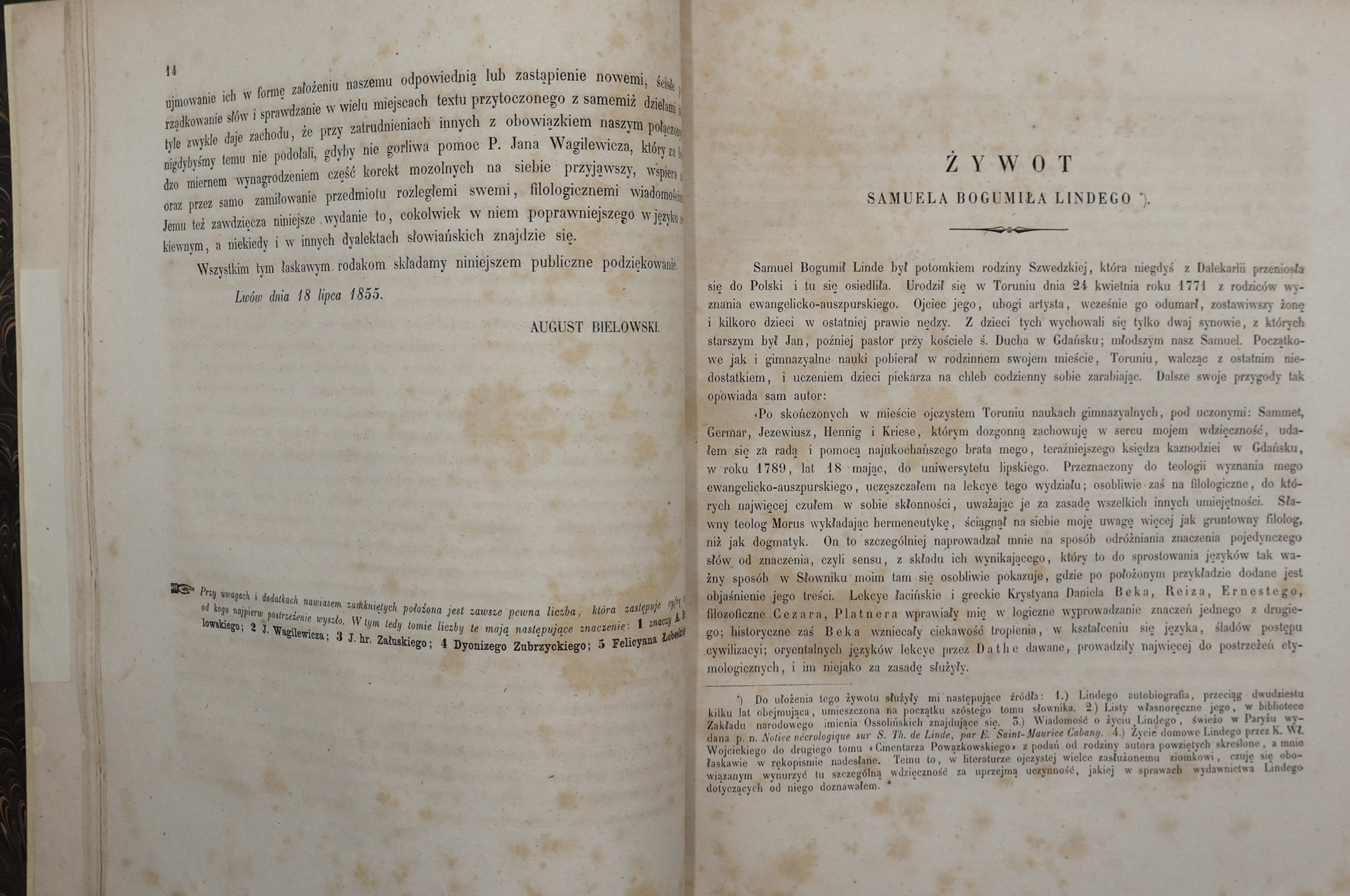
Samuel Bogumił Linde’s Dictionary of the Polish Language is a milestone in Polish lexicography and one of the most important works in the history of Polish scholarship. Linde (1771–1847), born in Toruń to a family of Swedish descent, studied theology and philology at the University of Leipzig, and after the fall of the Kościuszko Uprising, became involved with the Polish émigré community in Saxony. From 1794 to 1803, he served as librarian to Józef Maksymilian Ossoliński in Vienna, and it was precisely from Ossoliński’s extensive collections that he gathered material for the dictionary. The first edition was published in Warsaw between 1807 and 1814 in a print run of only 1,200 copies. It was printed at the Piarist Priests’ Printing House; Linde imported paper, typefaces, and trained printers from abroad, and set up the printing presses in his own apartment so he could oversee every stage of the work. The project was financed by Prince Adam Czartoryski, Count Józef Maksymilian Ossoliński, and Tsar Alexander I, who purchased 98 copies for schools in Lithuania and Ukraine. Contemporaries honored the work with a gold medal bearing the inscription “For the Dictionary of the Polish Language, Fellow Countrymen, 1816.”
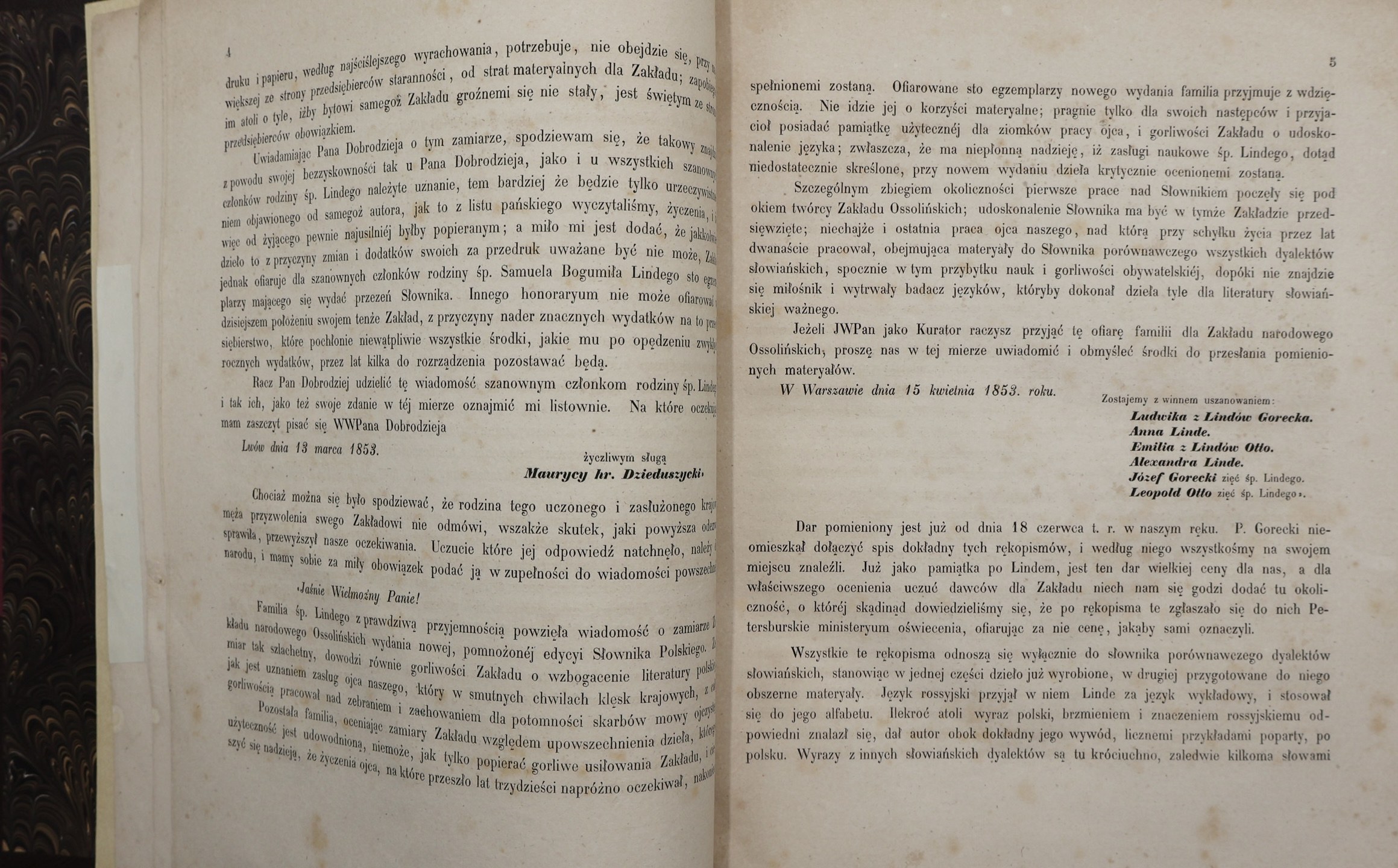
The dictionary contains approximately 60,000 entries arranged in alphabetical, with numerous equivalents in Slavic languages, German, Latin, and Greek—a total of approximately 250,000 foreign-language references. For the first time in Polish literature, the infinitive was adopted as the basic form of the verb. August Bielowski saw this as a sensation on a European scale: the work presented the Polish language on a scale unmatched by any other language at the time. Due to its small print run, the first edition quickly became a rarity. Therefore, the Ossoliński National Institute in Lviv published a second edition between 1854 and 1861, revised and expanded, edited by August Bielowski, who, based on Linde’s notes, made numerous additions, adapted the spelling to the 1830 orthography of the Society of Friends of Science, and included a biography of the author. Corrections to the second edition were made by Tymoteusz Lipiński, Jan Konrad Załuski, Dyonizy Zubrzycki, Felicyan Łobeski, and Jan Wagilewicz. The individual volumes were dedicated to Stanisław Kostka Potocki, Stanisław Zamojski, Adam Czartoryski, and Józef Poniatowski.
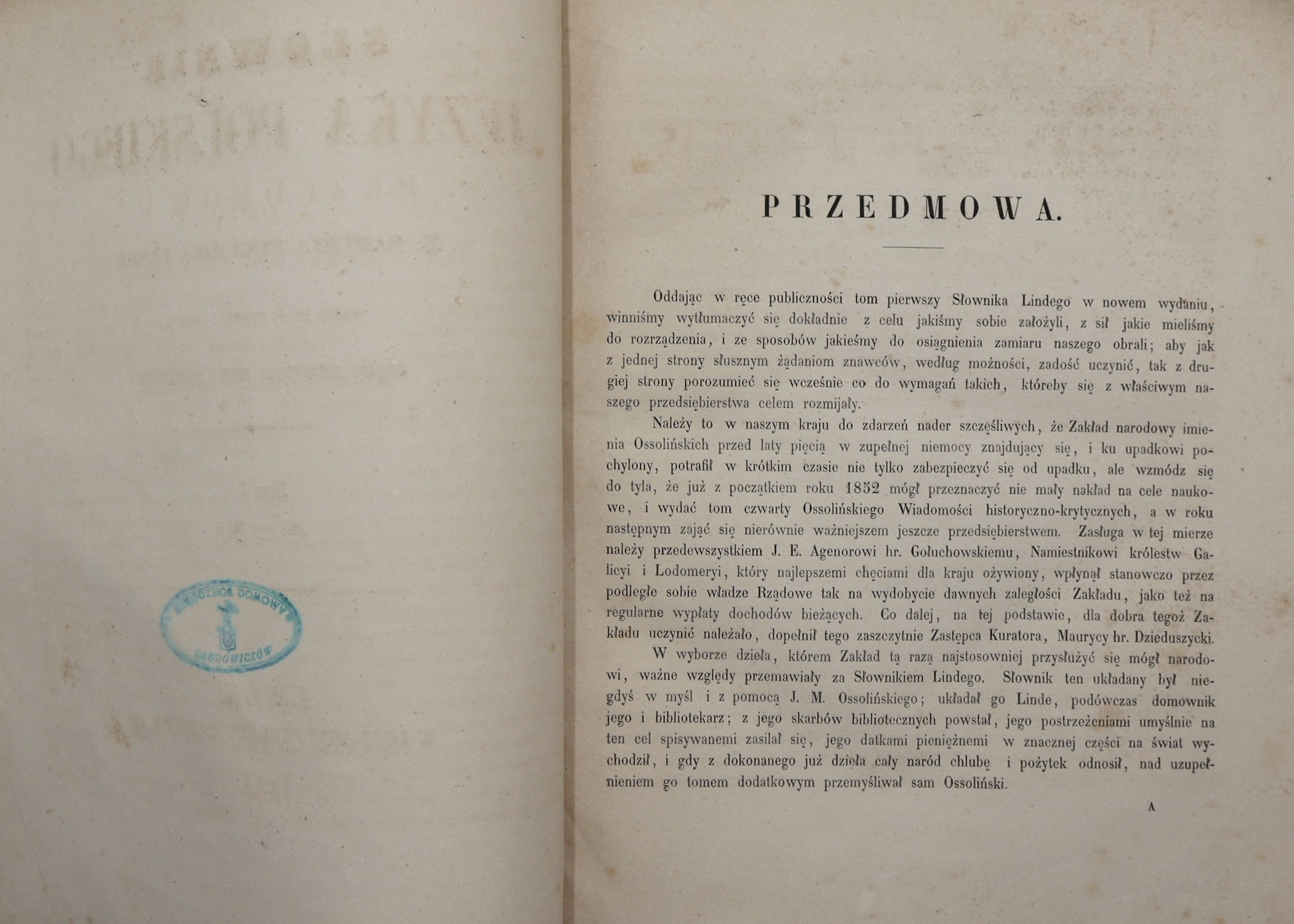
All six volumes bear the stamp of the private library of the Laudowicz family—a family associated with Polish intellectual and landed aristocratic life, documented in 19th-century scholarly literature. The stamp attests that the set belonged to a private library for generations and served as a working tool, not a decorative item. The pages of all volumes are slightly discolored—a natural sign of age and use. The blocks of the six volumes were hand-sewn in the workshop of Antykwariat Polski, which restored the volumes to full stability.
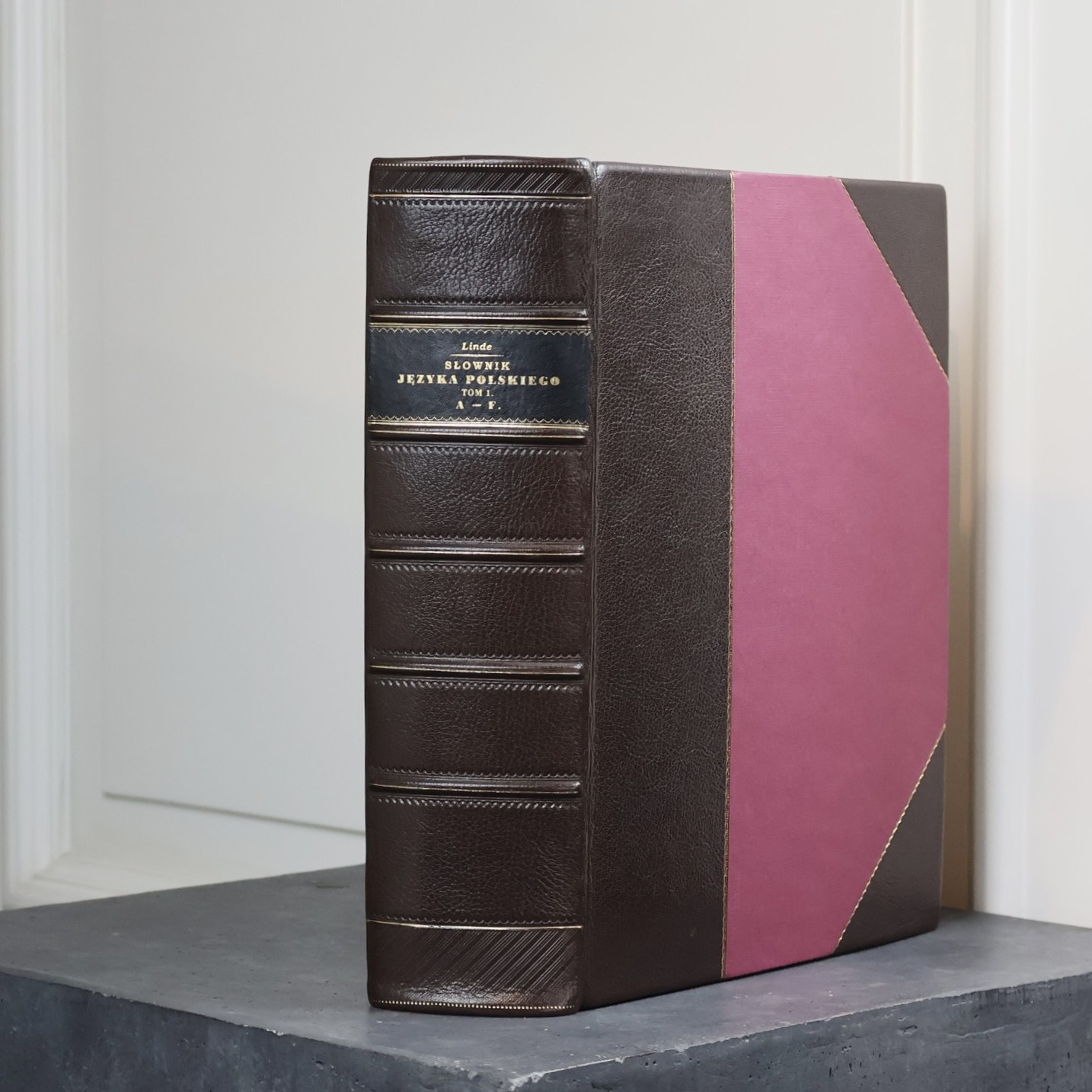
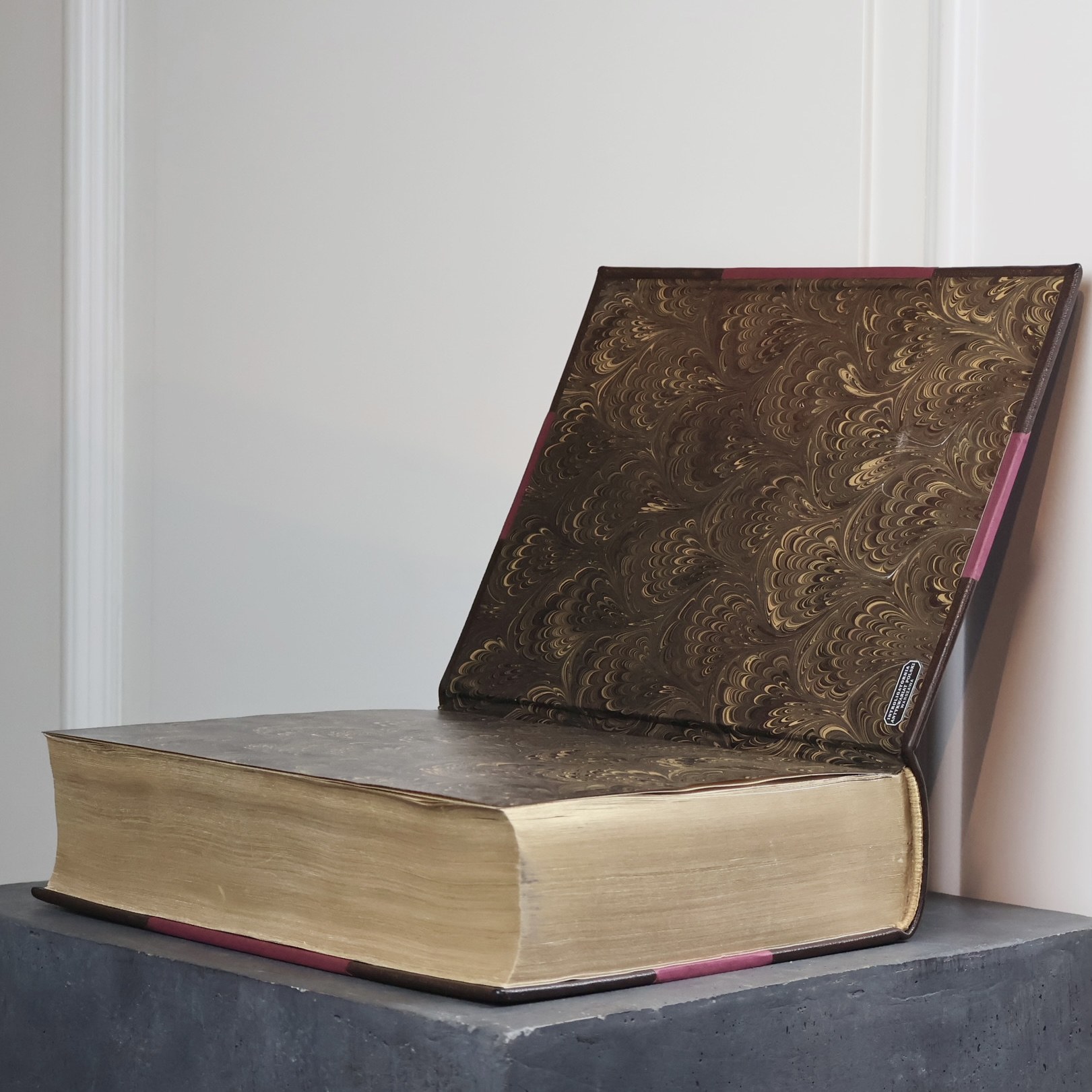
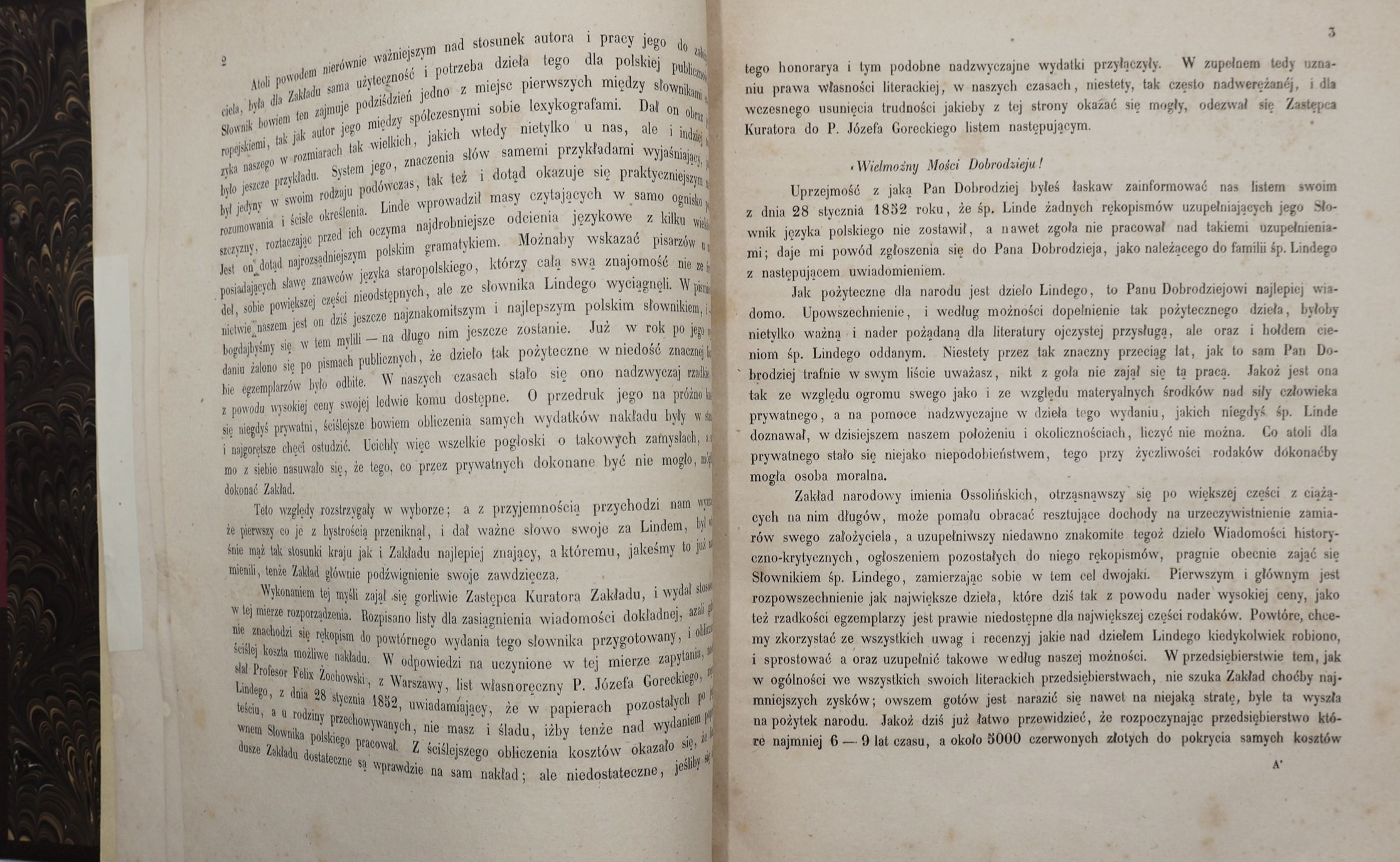
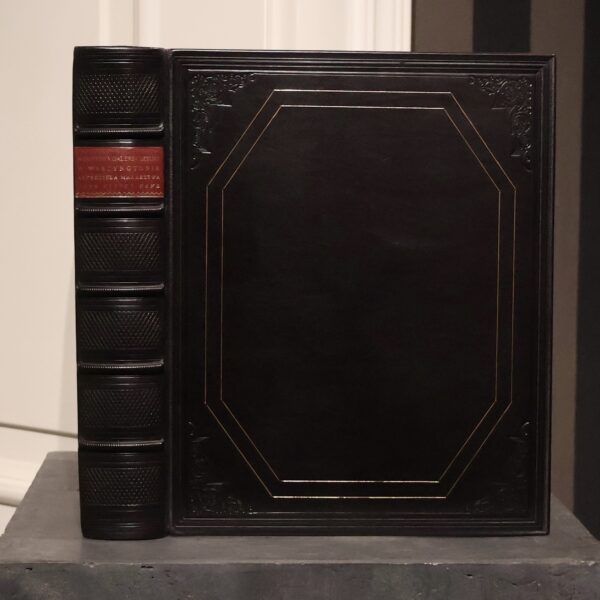
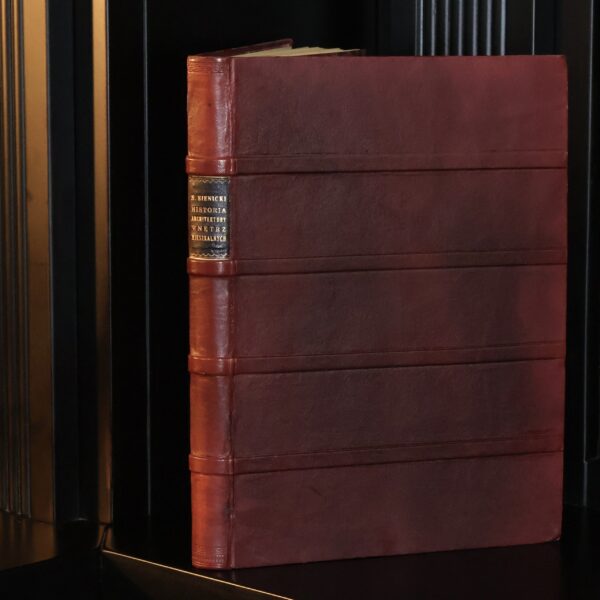
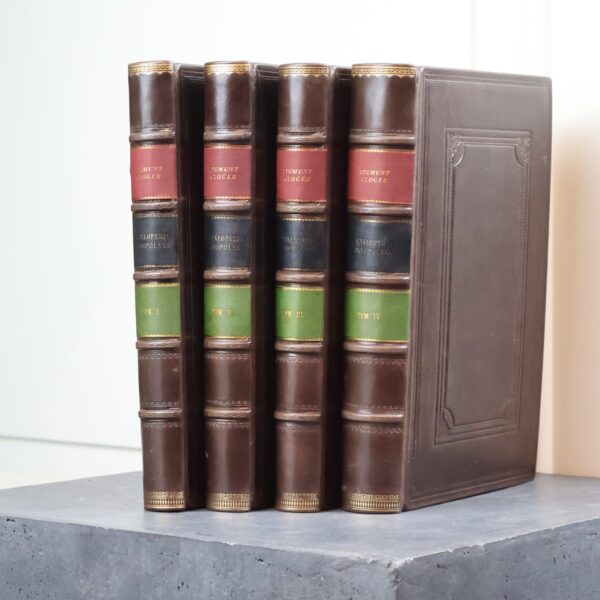
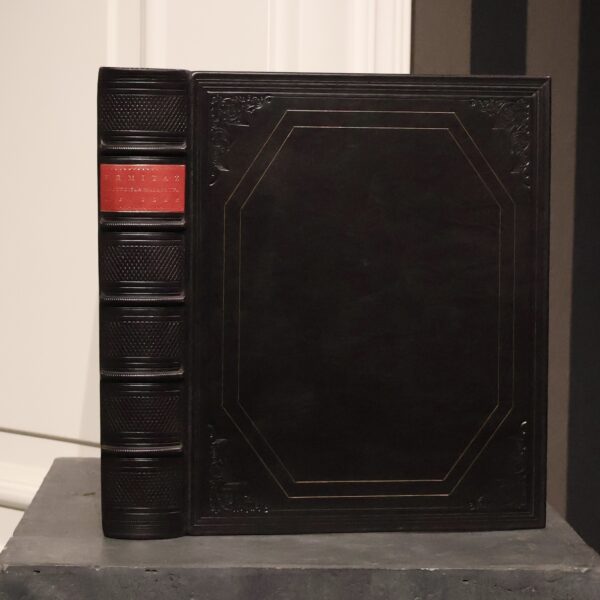
A half-leather bibliophile’s binding, handcrafted from the finest materials at the Antykwariat Polski bookbinding workshop. The spine and corners are made of natural brown leather with gold-embossed detailing, and the endpapers are covered in burgundy cloth. The hand-marbled endpaper features a peacock tail motif and was crafted in the Antykwariat Polski workshop.
The mission of Antykwariat Polski is based on a simple belief: valuable Polish books deserve to survive—not as exhibits behind glass, but as living objects, preserved and bound with the utmost artisanal care, ready for centuries to come in a collector’s library.


Reviews
There are no reviews yet.