What J.P. Morgan and Tytus Działyński Knew About Books: The Value of a Private Library
In 1924, on both sides of the Atlantic, an almost identical decision was made. In February, Władysław Zamoyski and his sister Maria signed a deed of donation before President Stanisław Wojciechowski, bequeathing the Kórnik estate—along with one of Poland’s most important libraries—to the Polish nation. A few weeks later in New York, J.P. Morgan Jr., known as Jack, transferred his father’s private library on Madison Avenue to a trust. Two families, two continents, one conclusion: a well-curated book collection eventually becomes more important than its owner. This story illustrates what a private library can be—a passion, an investment, and a showcase all at once.
The Collection: Books with a Story
The Kórnik Library began with a journey. Between 1817 and 1823, Tytus Działyński traveled throughout Poland, Sweden, Denmark, Germany, the Czech Republic, and France, establishing contacts with antiquarians and scholars and focusing from the very beginning on Polish books and those about Poland. Morgan began collecting on a large scale around 1890: illuminated manuscripts, early printed books, literary and historical manuscripts, and drawings by the old masters. Together, they built not just a collection, but a curated whole with a distinct profile. And that is precisely what distinguishes a collector’s library from a shelf full of old books.
The value of a specific copy is determined by several factors at once: rarity, completeness, condition, and provenance—that is, its documented history of ownership. This is clearly illustrated by the example of Shakespeare’s First Folio, sold in 2020 at Christie’s in New York. It was accompanied by a letter from 1809 in which Edmond Malone, the foremost Shakespeare scholar of his time, confirmed the copy’s purity and authenticity. It’s similar in our day-to-day work—a bookplate, a seal from an old library, or a handwritten dedication can determine whether a book is simply old or truly valuable. And a seal from one of Poland’s great book collections on the title page is always a story in itself for a collector.
Investment: Time, Rarity, and Patience
The First Folio is also the best lesson in taking the long view. According to the Christie’s catalog, in the 1790s, copies changed hands for an average of 30 pounds; in the first half of the 19th century, for about 60; and in the second half, for as much as 290. In 2001, a complete copy fetched over $6 million, and in 2020, it sold for $9.98 million—a record for a printed literary work. It was purchased by Stephan Loewentheil, an antiquarian bookseller from Brooklyn.
However, the antiquarian book market is not a stock exchange, and it’s only fair to discuss the other side of the story as well. In 2013, one of the eleven surviving copies of the Bay Psalm Book—the first book printed in what is now the United States—was sold at Sotheby’s in New York. The price of $14.165 million was a record for a printed book at the time—and yet it was well below the auction house’s estimate of $15–30 million. The hammer fell at $12.5 million; the remainder was the auction house’s commission. This is how the market works: prices for the rarest items rise over decades, but selling takes time, involves costs, and the outcome of a specific auction is never a foregone conclusion. That is why a book is purchased first and foremost as a book, and only then as an asset. Investment value is built through the careful selection of copies, bibliographic verification, and attention to condition—not by the number of volumes on the shelf.
Reputation, or the prestige that endures
The oldest Polish lesson comes from Warsaw. On August 8, 1747, brothers Józef Andrzej and Andrzej Stanisław Załuski opened their private library to the public at the Daniłowicz Palace, known today as Dom pod Królami. The Załuski Library initially numbered nearly 200,000 volumes and was one of the first national libraries in Europe; by 1794, it already contained about 400,000 volumes. After the fall of the Kościuszko Uprising, the collection was transported to St. Petersburg, where it became the foundation of the Imperial Public Library, and a large portion was not recovered until after the Treaty of Riga in 1921. Nearly three hundred years have passed, and to this day we simply refer to it as the Załuski Library.
Others followed in their footsteps. In 1817, Józef Maksymilian Ossoliński founded the National Institution bearing his name in Lviv, based on his own collection—the Ossolineum continues to operate today in Wrocław. In 1829, Edward Raczyński opened a library in Poznań housed in a building whose façade was modeled after the eastern elevation of the Louvre in Paris. In the charter, he stipulated that anyone could use it, without distinction. Today, it is the oldest operating public library in Poland. In the deed of donation for Kórnik, Władysław and Maria Zamoyski wrote that the family had long wanted their estate to continue serving the Polish cause.
New York is just as familiar with this mechanism. The name Morgan, once associated primarily with banking, now lends its name to a museum and research library in the heart of Manhattan. David Rubenstein, co-founder of the Carlyle Group, who purchased the Bay Psalm Book, has announced that he will lend it to libraries across the country. The rare book has become a tool for patronage and the best possible endorsement for its owner. Two centuries separate Morgan from the Załuski family. The mechanism is the same.
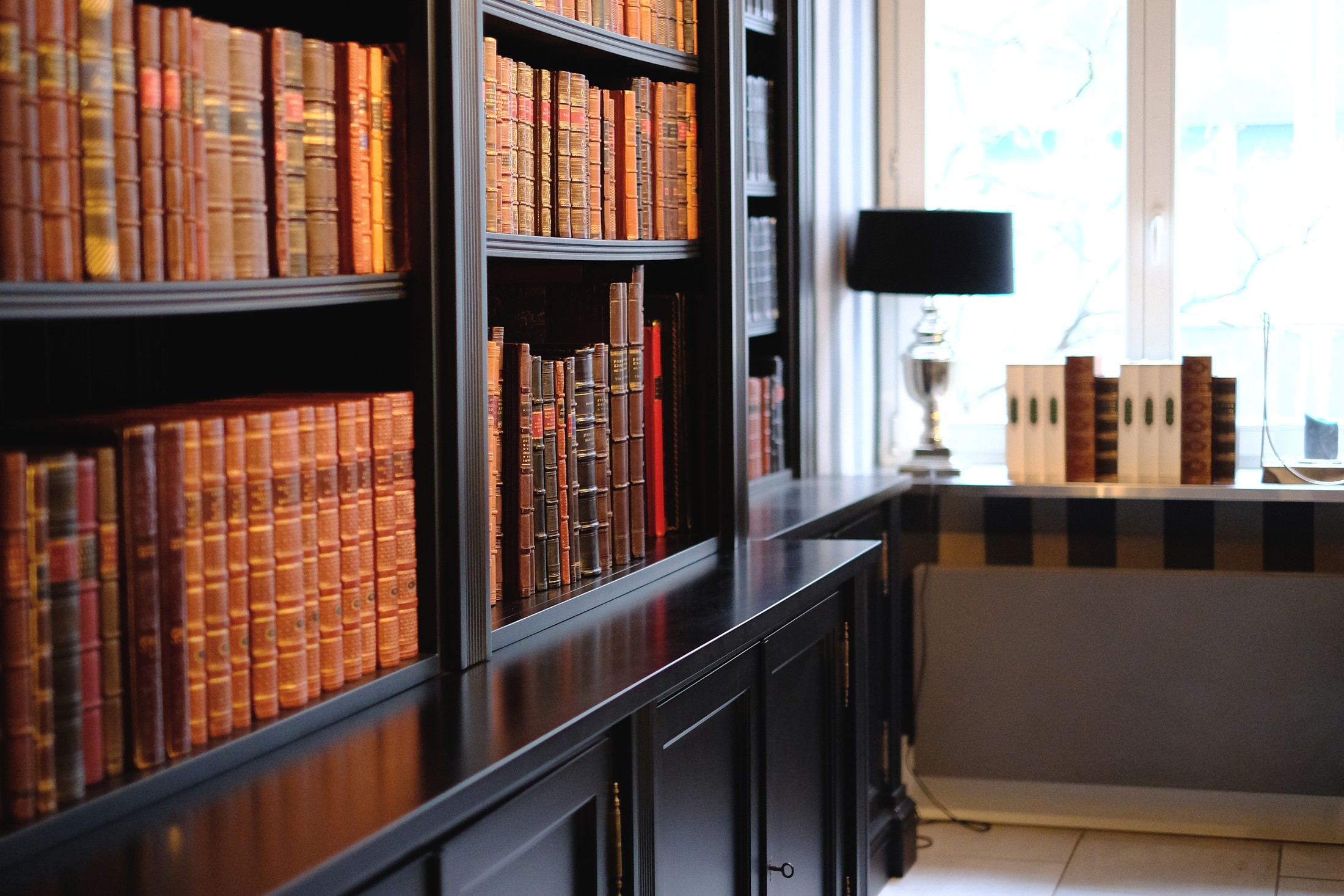
It goes beyond the institutional level. A library says more about its owner than any other object in the home or study. Many valuable items can be purchased in a single afternoon. A cohesive book collection featuring first editions and rare copies usually cannot simply be bought—it must be built, and that requires time, knowledge, and consistency. That is why a well-curated library sends a clear message: that its owner thinks in terms of decades, values culture, and recognizes the worth of things that are not meant for show, but to last for years.
Morgan understood this perfectly. He built his library right next to his own home, and architect Charles McKim designed it so that the building itself would reflect the stature of the collections housed within. Today, whether in an entrepreneur’s office, a private residence, or a company headquarters, a library serves a similar purpose: it builds trust, sparks conversations that no presentation could, and lingers in guests’ memories long after the meeting is over. And for a family, it becomes more than just an asset—it is a legacy that is passed down from generation to generation along with the family name.
Our Library and Our Mission
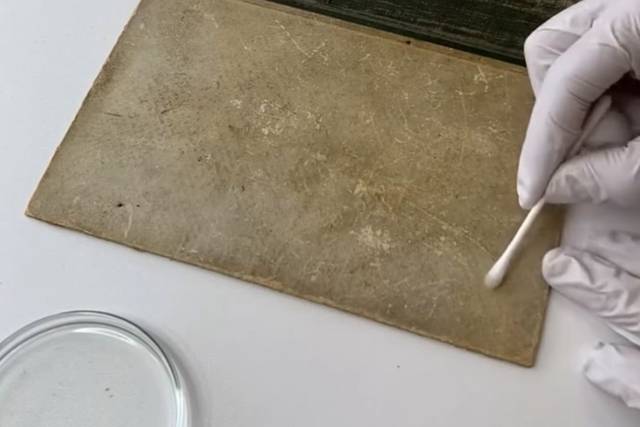
We’re not just writing about this as observers. For years, we’ve been building one of the largest private book collections in Poland, and we know from our own experience how much patience, knowledge, and discipline it takes to build a collection that’s meant to outlast its owners. We view this as a mission in the same spirit as that of the Załuski and Działyński families: to find books that would otherwise be scattered or destroyed, verify them against primary sources, restore them in our conservation studio, and preserve them for future generations. As a member of CINOA, we commit to ensuring that every description, every appraisal, and every statement regarding a book’s condition is based on sources, not on intuition.
The library we’re building now
We draw on this experience when creating private libraries for our clients. We’ve been building one of them for about two years. Its core consists of the first Polish editions of works by Nobel Prize in Literature laureates and collector’s items. Each volume is carefully selected and verified, and only pristine copies are included in the collection. They are then processed in our workshop: first, they undergo conservation, and then they are elegantly bound in natural leather, bearing our workshop’s mark and the name of the collection.
This last detail matters. To this day, we refer to Poland’s great book collections by the names of their founders—the Załuski Library, the Raczyński Library, and the Ossolineum. The name on each volume ensures that this collection establishes its own identity and future provenance from day one: in a few decades, each copy will carry information about which collection it comes from.
This library has no completion date. Good copies of first editions appear on the market irregularly, so each subsequent volume is the result of a patient search. This is how the great book collections we’ve written about came to be—and this is how this one is coming to be. It’s a story and an adventure that will continue for many years to come.
If you’re thinking about starting your own library—whether it’s a collector’s library, an investment library, or one meant to reflect who you are and your company— please contact us. We’ll help you plan it so that it makes sense both from a bibliophile’s perspective and as an investment. And we’ll keep sharing more stories from the antiquarian book market in our newsletter.