How to Set Up a Home Library So You’ll Actually Use It
Photo: Juliana Uribbe / Unsplash
A few months ago, a woman walked into the used bookstore with three boxes of books that had belonged to her parents. She stood in the doorway and asked if anyone would buy the whole lot at once, because she had no place to put them in her new apartment. We talked for a while, and it turned out that the problem wasn’t the books themselves, but rather a lack of ideas about what to do with them—a shelf in the entryway, a dresser in the bedroom, boxes in the basement. We hear this same dilemma all the time: people have books—sometimes really good ones—but they have no idea how to set up a home library so that it’s not just decoration, but something they actually use.
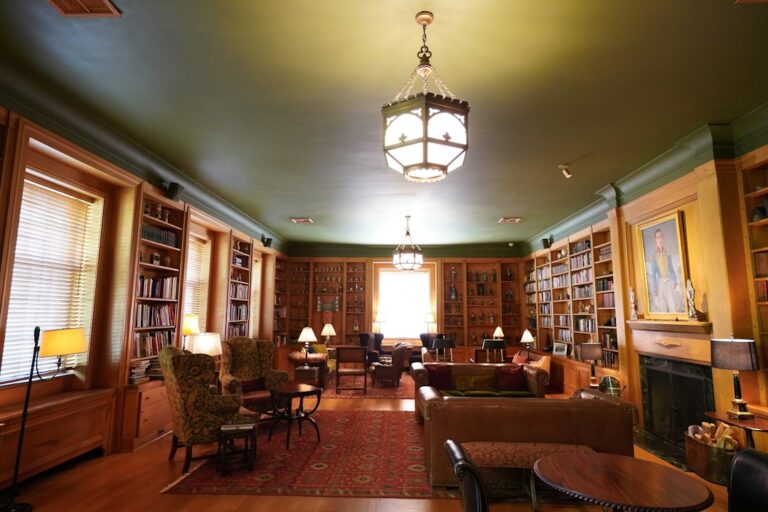
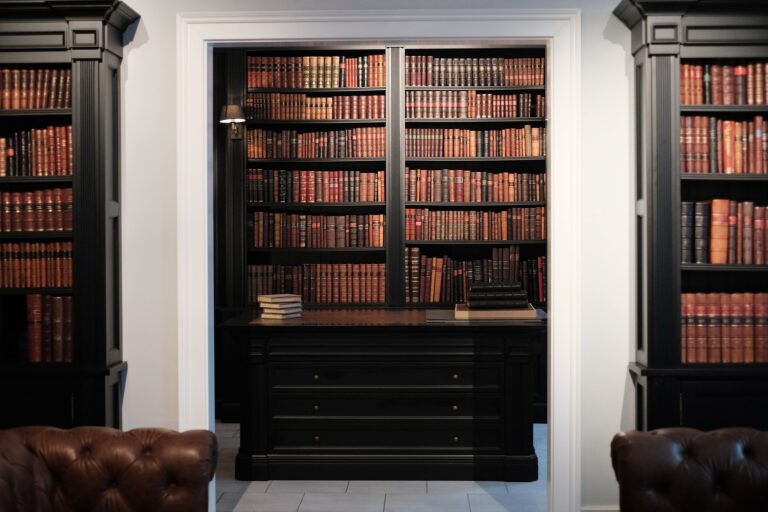
Because that’s the crux of the matter. A bookshelf full of beautifully bound spines looks impressive in a photo, but if reaching for a specific title requires moving half the books on the shelf, sooner or later no one will bother to reach for it. A good home library is a compromise between how it looks and how it’s used on a daily basis—and that’s the compromise we want to write about today.
Where to Start Before Buying a Bookshelf
The biggest mistake we see is buying a piece of furniture before counting the books. People walk into a store, choose a bookshelf that matches the color scheme of their living room, and only then try to fit their twenty-year-old collection onto it. This ends up with books stacked in two rows—horizontally on top and vertically standing separately on the shelf—which looks chaotic and makes it practically impossible to find anything without searching the entire wall.
It’s better to do the opposite: count how many running meters of books you actually have (yes, literally measure your existing shelves with a tape measure), add some extra space for future purchases, and only then look for a bookcase with the right capacity. If your collection includes larger formats—art books, encyclopedias, old hardcover editions—you’ll also need to plan for taller shelves, since the standard 24 centimeters often won’t accommodate them. Something like a four-volume set such as the *Encyclopedia of Old Poland* simply requires more space than a pocket-sized edition of a novel.
A way to organize a bookshelf that doesn’t turn into a mess
Many customers ask us whether books should be arranged by color, alphabetically, or by format. The answer is always the same: it depends on the purpose of the library. If it’s a working collection that’s used regularly—work-related reading materials, dictionaries, encyclopedias—alphabetical or subject-based organization works best, because it lets you find a specific item without having to search. If, on the other hand, the bookshelf also serves a decorative purpose in the living room, you can organize sections by color or spine height—provided they don’t cover the entire collection, but only a separate part of it.
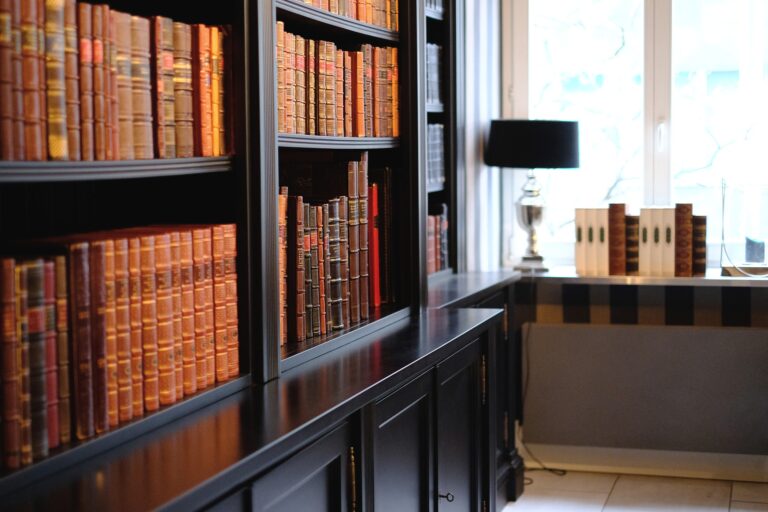
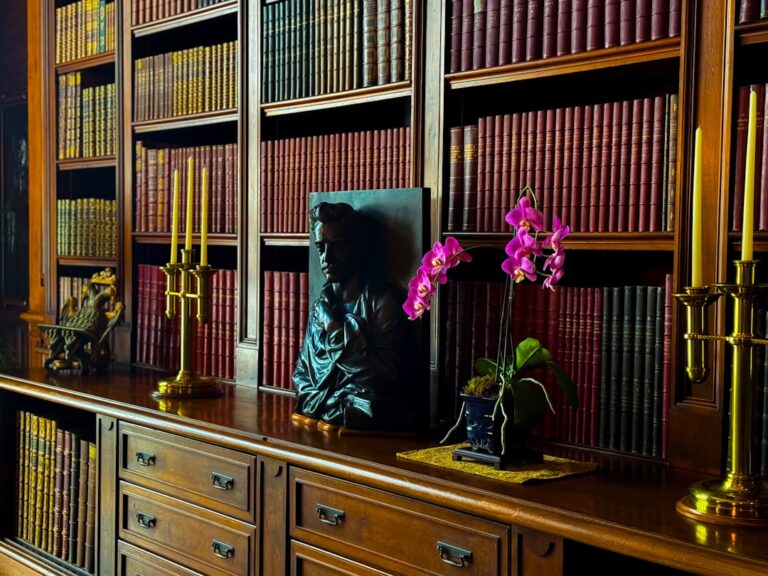
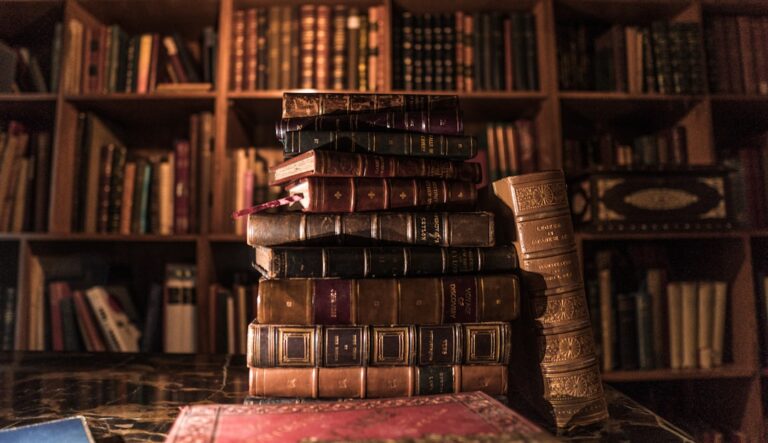
A mixed arrangement also works well: the lower, easily accessible shelves for the books you use most often, and the upper, harder-to-reach shelves for those you reach for less frequently or that hold more sentimental or collector’s value. Hardcover sets, beautiful leather- or cloth-bound editions—such as artistically bound collections—naturally catch the eye and look great at eye level, where we want someone to notice them as they enter the room. It’s worth remembering that, in this sense, a book’s aesthetic value doesn’t always align with its market or collector’s value—we wrote more about this difference in our article on the rarity and value of books.
Light, moisture, and a place that’s often forgotten
Home libraries usually draw inspiration from interior design photos, but few of these photos show what happens to the spines of books that have been sitting in direct sunlight for years. Direct sunlight fades the covers and accelerates the deterioration of the paper, so a bookshelf by a south-facing window is an aesthetic mistake that will last for years. The same goes for moisture—an exterior wall, especially in older buildings, tends to be cooler and promotes condensation, which is simply harmful to paper and leather bindings.
It’s also a good idea to leave some space between the books and the back of the bookshelf so that air can circulate freely, and to avoid cramming the books too tightly together —a book that’s crammed in tightly is harder to remove, and pulling it out can easily damage the spine, especially in older, more fragile bindings. If your collection includes books that need restoration or have been stored for years in poor conditions, sometimes the only solution is to have the binding professionally repaired before they even go back on the shelf.
Ultimately, a well-designed home library doesn’t have to look like something out of an interior design magazine—it should simply reflect how people actually read and pick up books in that particular home. One that actually works always looks better than one that just pretends to be used.