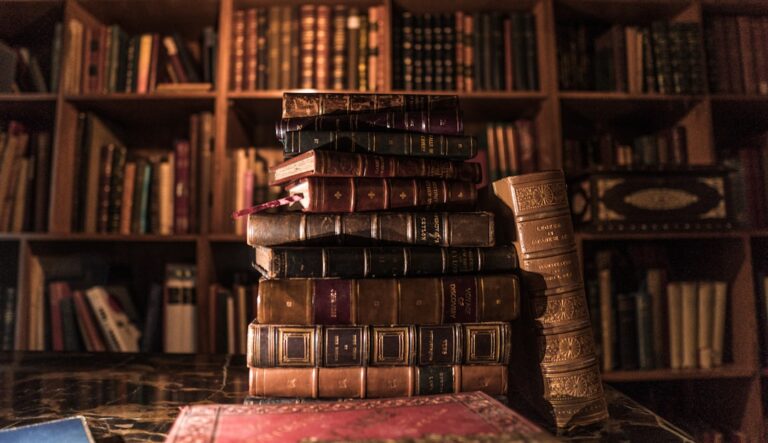
What is bibliophilia, and how does a collector differ from a reader?
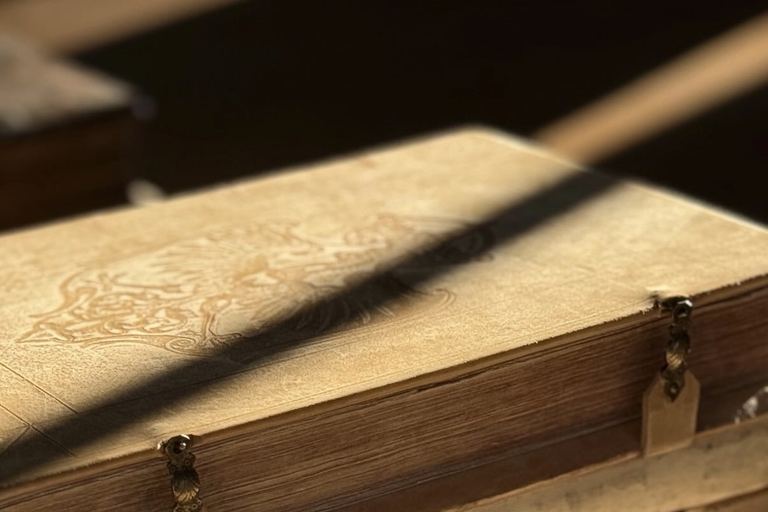
Photo: Shiju Varghese / Unsplash
What is bibliophilia? This question often comes up among customers who are visiting an antiquarian bookstore for the first time and aren’t quite sure how to describe their interest in old books. Bibliophilia is a passion for books understood not only as a medium for content, but as an object—valued for its form, history, binding, origin, or rarity. A bibliophile is someone who appreciates a book as a whole, rather than merely as a text to be read. This distinction may seem subtle, but in practice it leads to behaviors, choices, and priorities that are entirely different from those that guide the average reader.
Below are a few specific points that illustrate what this difference is and how to tell which side of the line a person is on.
- A reader looks for content; a bibliophile looks for a specific copy. For the reader, what matters most is what is written—the plot, the argument, and the author’s style. The edition is of secondary importance, as long as the text is complete and legible. A bibliophile, on the other hand, is interested in a specific copy: the year of publication, print run, publisher, paper quality, illustrations, and sometimes also the history of a given volume—who owned it, what dedications it contains, and whether it has retained its original binding.
- A collector thinks in terms of a collection, not a single item. A bibliophile and a book collector are closely related concepts, but they are not the same. A collector builds a cohesive collection according to a specific criterion—this could be the works of a single author, publications from a single publisher, a particular subject, or a specific period. Bibliophilia, in a broader sense, does not require such a systematic approach—one can love books as objects without building a collection in the strict sense of the word.
- The condition of the item is a different matter. For the avid reader, a well-thumbed, stained copy with a peeling cover still serves its purpose—the text is accessible. For the bibliophile and collector, the book’s condition is often crucial, as it affects both its value and the pleasure of engaging with the object. However, this does not automatically mean that rarity and value go hand in hand—we discussed in more detail why they are not the same thing in our article on the rarity and value of books.
- A bibliophile is interested in the binding, while a reader rarely pays attention to it. Determining whether a book was bound by the publisher or later by a bookbinder is important information for a collector, as it affects the book’s valuation. Readers, however, usually do not even ask themselves this question.
- A different attitude toward ownership. After reading a book, readers often give it away, sell it, or pass it on—and its role is over. A bibliophile treats a copy as something that stays on the shelf regardless of whether the text will be read again. The very presence of the book, its appearance, and its history have value in and of themselves.
- Knowledge of the market and origin. Who is a bibliophile, if not someone who, over time, begins to familiarize themselves with publishers, print runs, and the distinctive characteristics of individual publishing houses or printing presses? Many bibliophiles also track where specific copies on the market come from—hence their interest in how antiquarian book auctions work and the journey a book takes from being listed to being sold.
- A willingness to invest time and money in exploration. Readers buy books wherever it’s most convenient and cheapest. A bibliophile may be willing to wait months for a specific edition, visit used bookstores, haggle, and sometimes pay more for a copy in better condition or with an interesting provenance.
These distinctions are neither rigid nor mutually exclusive—many readers eventually become bibliophiles, and a significant number of bibliophiles remain, at the same time, attentive readers of the texts they collect. Bibliophilia is therefore not a separate hobby detached from reading, but rather an extension of one’s interest in books to include their form and history. It’s worth keeping this in mind before equating a love of literature with a love of specific copies—these are two different, though often coexisting, passions.