Archiving Documents in a Ledger-Style Format—Who Really Benefits from It?
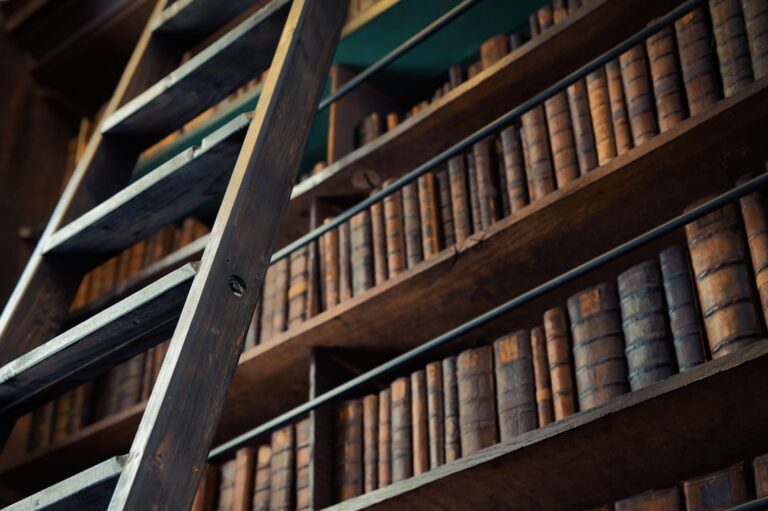
Photo: Michal Kučera / Unsplash
A binder with a company logo on the spine is more likely to be associated with an accounting firm than with something you’d want to display on a prominent shelf. Meanwhile, more and more law firms, family-owned businesses, and private individuals are opting to archive documents in a “book-style” format—that is, binding important papers in a form resembling a traditional volume, with a leather or cloth cover, embossed designs, and a sewn spine. This solution, which straddles the line between bookbinding and practical document management, has a longer history than one might think—after all, for centuries, land registers, guild chronicles, and court records looked exactly like this.
How is this different from a regular binder?
The difference isn’t purely aesthetic, though that’s what catches the eye first. A standard office binder is designed for easy sheet replacement and low unit cost—hence the plastic covers, metal mechanisms, and paper of average durability. Book-style binding, on the other hand, is designed for the opposite: durability measured in decades, materials resistant to moisture and light, and a construction that won’t fall apart with frequent opening. The block of pages is usually sewn or glued using methods long established in bookbinding, rather than bound with plastic spines. For someone who has never encountered this craft, it may be helpful to explain the differences between commercial bookbinding and fine bookbinding —the same artisanal principles apply both to the restoration of old books and to the creation of new, luxury archives.
Who really benefits from this?
In practice, customers who order this type of fixture fall into several distinct groups:
- Law firms and notary offices —for them, it’s not just about durability, but also the impression that a library-style corporate archive makes during a meeting with a client. Company founding documents or articles of incorporation bound like a book inspire trust in a way that a plastic binder simply cannot.
- Family-owned businesses with a long history —company chronicles, certificates, and contracts from the early years of operation—are documents that make sense to preserve in a format that can withstand decades of storage, rather than just until the next office reorganization.
- Individuals —college diplomas, property deeds, family correspondence, family trees. These are documents with sentimental value that are often passed down to the next generation, so it’s worth ensuring that they physically survive this transition.
- Cultural institutions and foundations —minutes, bylaws, and anniversary materials intended to represent the organization to the outside world, such as when presenting them to donors.
- Collectors and bibliophiles —people who compile documentation for their own collections (certificates of provenance, correspondence with auction houses, appraisals)—often want this documentation to match the rest of their collections.
Elegant Document Binders—What This Process Looks Like
Ordering a book-style binding usually begins with a discussion about the document’s intended use—whether it will be opened frequently or rather stored and displayed only occasionally. This determines the choice of spine construction and the type of paper used for the endpapers. In practice, the process involves several steps:
- assessment of the condition and format of documents to be bound or archived,
- choice of cover material—leather, bookbinding cloth, marbled paper,
- optional embossing of the title, company logo, or initials on the cover and spine,
- stitching or gluing the block in a way that allows it to be opened freely without the risk of the spine cracking,
- protection against moisture and light—especially important for documents intended to remain in circulation for generations.
This kind of work requires the same skills that antiquarians and bookbinders have been using for years to conserve old prints—after all, handling paper that is a hundred years old and creating a durable binding for a new document both rely on a similar understanding of materials and how they age.
What to Look for Before Placing an Order
Before deciding to archive documents in a book-style format, it’s worth clarifying a few practical matters. First, will the volume of documents grow over time (e.g., additional company minutes), as this affects the choice of a binding design that allows for adding pages? Second, what paper sizes and weights are already available, since not all of them can be bound without additional reinforcement. Third, whether the binding is intended to serve a purely practical purpose or also a representative one, as this determines the level of decoration and the cost of the entire project. Those who wish to understand the value and classification of older bindings before deciding on their own project may also refer to a text explaining which book editions are more valuable and why —the principles regarding the durability of materials and the quality of the binding are very similar here.
Summary
Binding documents into a luxurious volume is not only an aesthetic gesture but also a practical investment in the durability of materials meant to last longer than a single generation. Whether it’s a corporate archive, a notarial deed, or a family diploma from half a century ago, a well-crafted bookbinding job can extend a document’s life by decades—and ensure that it reaches future owners in a condition worth preserving.